Wildlife facts
The Great Migration, explained
October 2026 · 5 min read
What the migration actually is
The Great Migration is the year-round movement of roughly 1.3 million wildebeest, joined by hundreds of thousands of zebra and plains gazelles, across the Serengeti ecosystem in Tanzania and the Maasai Mara in Kenya. The herds are not touring; they are chasing fresh grass and reliable water, and the rains decide where those are.
It is the largest overland migration of large mammals on Earth, and it happens on no schedule that fits neatly on a poster. The herds move as one great loop, splitting and regrouping as they go.
Where the herds are, roughly, through the year
- December–March: the short-grass plains of the southern Serengeti and the Ndutu area — calving season, when hundreds of thousands of foals are born within a few weeks.
- April–June: the long rains push the herds west toward the Grumeti River in the Serengeti's western corridor.
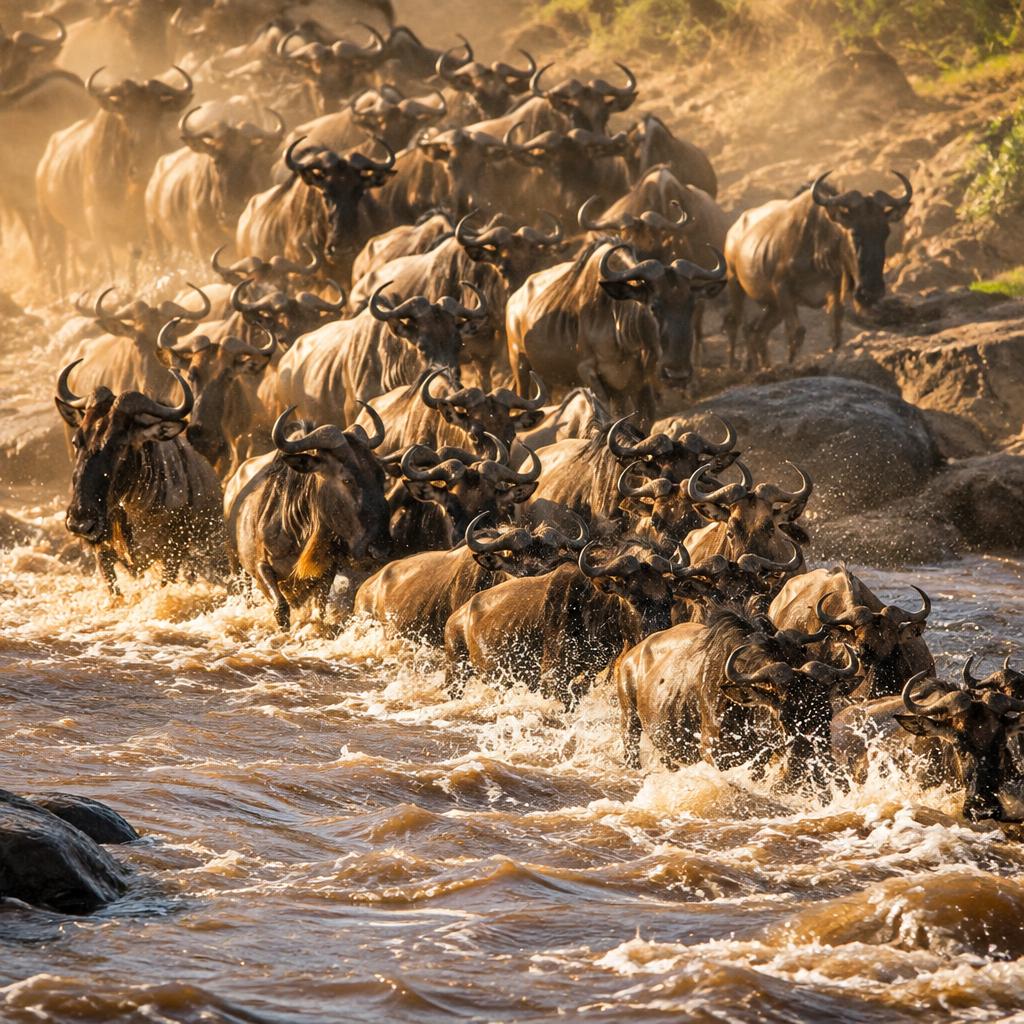
- July–October: the dry season drives the herds north into the Maasai Mara, with the famous Mara River crossings along the way.
- November: the short rains begin and the herds turn south again, completing the circle.
Why river crossings are unpredictable
A crossing is not an appointment. Herds mass on the riverbanks for hours or days, waiting — often for rain, sometimes for nothing anyone can name — before a single animal commits and the rest pour in behind it. Local guides who watch the herds daily give you the best odds of being in the right place.
That unpredictability is also the point. Safari is wildlife, not theatre. Build in a few days on either side of the migration and you trade a guaranteed-looking itinerary for a genuinely great one.
Planning a migration trip
You do not need to cover the whole circuit. The strongest migration trips stay where the herds are and let the wildlife come to them. Tell us the month you can travel and we will recommend where the herds are likely to be, then build the itinerary and send a quote within 24 hours.